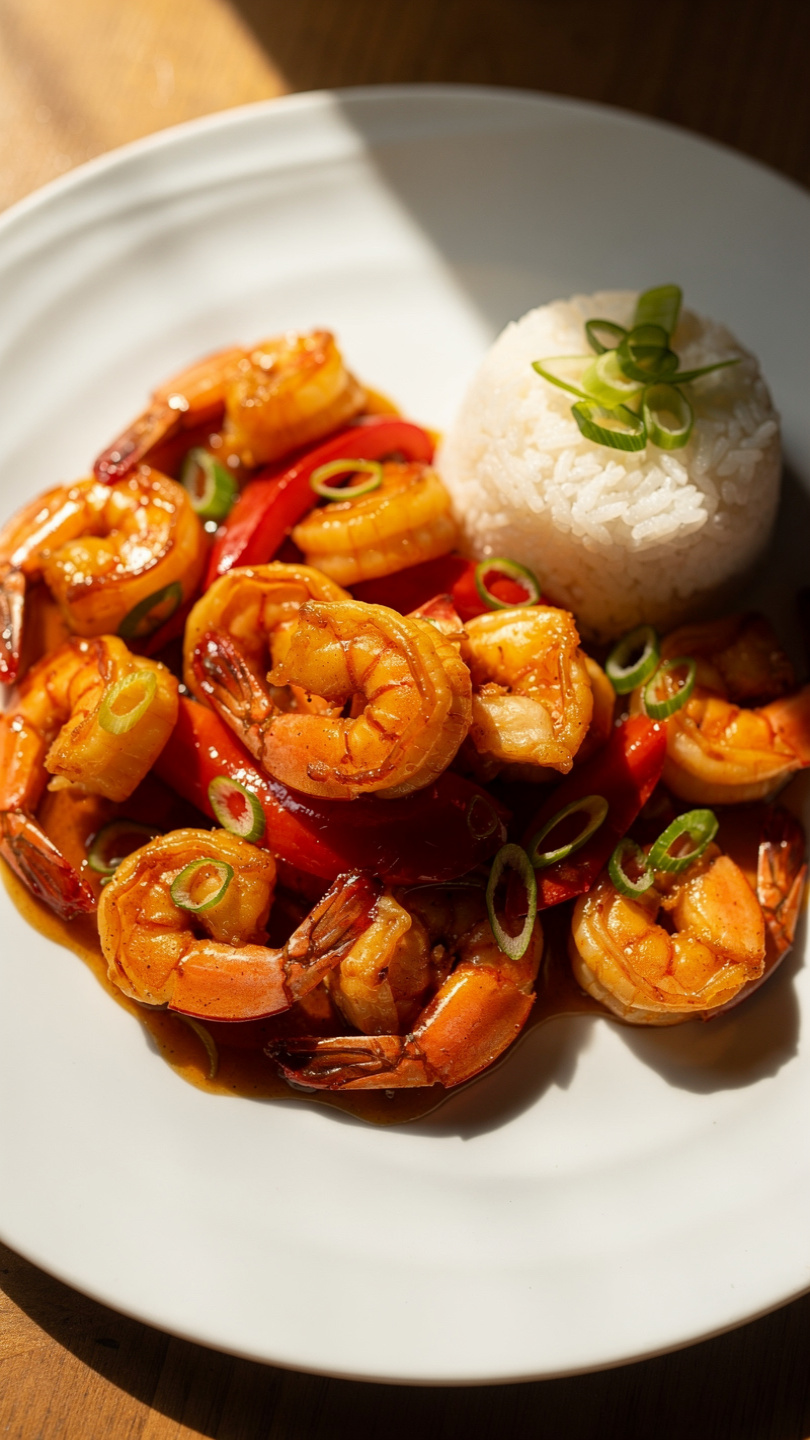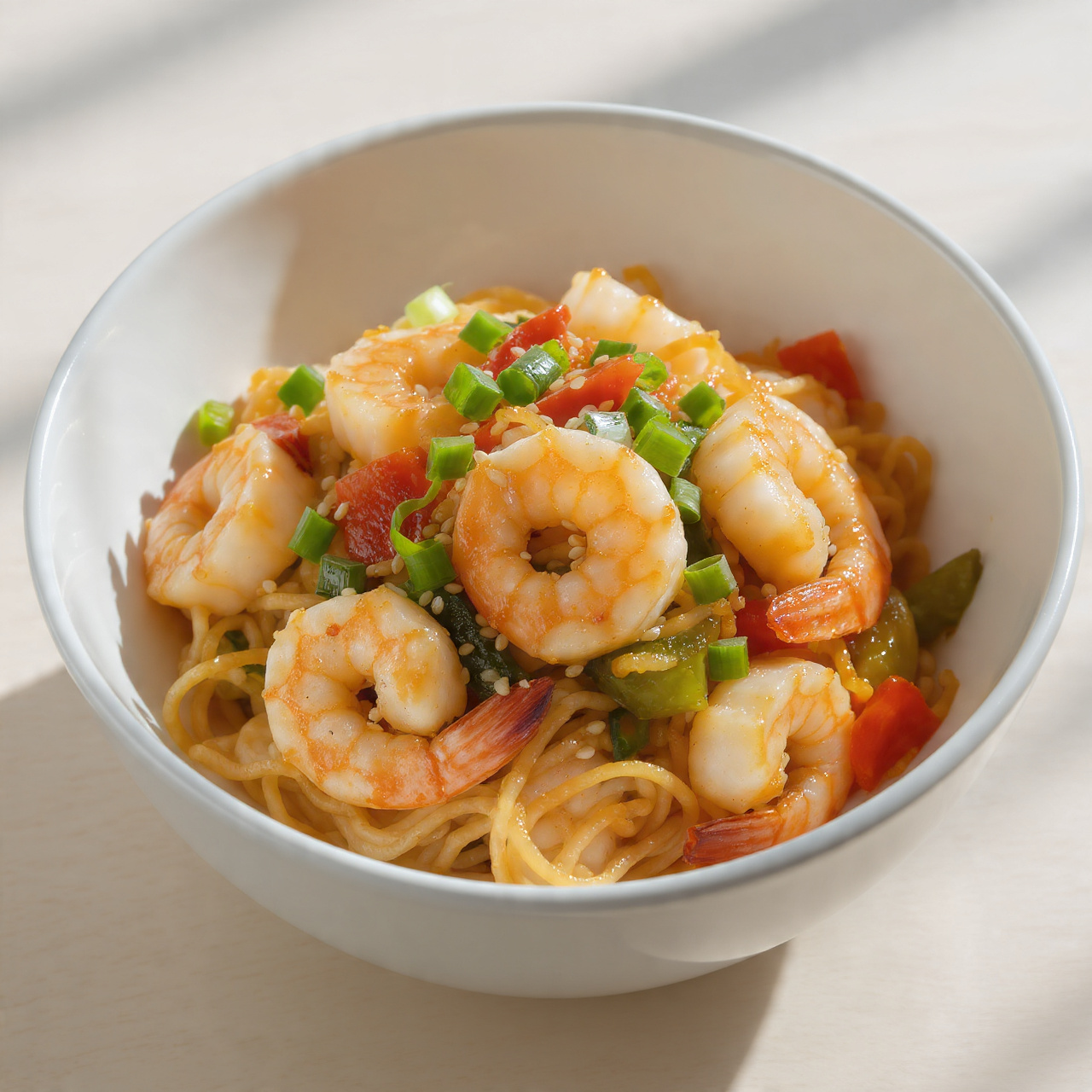
Shrimp Stir Fry with Rice Noodles
This easy shrimp stir fry with rice noodles comes together in under 30 minutes with tender shrimp, crisp vegetables, and a savory sauce that clings to every gluten-free noodle.

The Weeknight Stir Fry That Tastes Like Takeout (But Better)
Some nights, you want something that feels special but asks almost nothing of you. This shrimp stir fry with rice noodles is exactly that. It is the kind of recipe that hits the table in under 30 minutes, fills the kitchen with the smell of garlic and ginger sizzling in a hot wok, and disappears from every plate before you even sit down.
Rice noodles are the unsung hero of easy Asian rice noodle recipes. They are naturally gluten-free, cook in minutes, and have a silky, tender texture that soaks up a savory sauce beautifully. Pair them with plump shrimp, crisp vegetables, and a glossy umami-forward sauce, and you have a gluten-free noodle stir fry that could easily replace your usual takeout order for good.
Whether you are looking for easy rice noodle stir fry ideas, hunting for gluten-free rice noodle dishes that do not feel like a compromise, or just need a reliable weeknight dinner, this recipe checks every box.
Why This Recipe Works
A great stir fry with rice noodles comes down to a few key things:
- High heat. A screaming hot wok creates wok hei, that slightly smoky, caramelized quality that makes restaurant stir fry taste different from anything cooked at home on low heat.
- Dry shrimp. Patting the shrimp completely dry before cooking ensures they sear rather than steam, giving you that gorgeous pink color and slight crust.
- Pre-mixed sauce. Having your sauce ready before you start means nothing overcooks while you scramble at the counter.
- Soaked but not overcooked noodles. The rice noodles only need to soak in warm water until pliable. They finish cooking in the wok, which means they absorb the sauce instead of becoming waterlogged.
Chef's Tip: Do not walk away from a hot wok. Stir fry moves fast. Have every ingredient prepped, measured, and within arm's reach before you turn on the heat. Mise en place is not just chef talk here, it is the difference between a perfect stir fry and a pile of sad, overcooked noodles.
Ingredients Worth Paying Attention To
For a stir fry rice noodles recipe this simple, ingredient quality carries real weight. A good gluten-free tamari has a deeper, more rounded flavor than standard soy sauce and keeps this dish accessible for anyone avoiding gluten. A carbon steel wok or a heavy cast iron skillet will give you far better heat distribution and that sought-after char than a standard nonstick pan.
Having the right tools and pantry staples on hand makes every gluten-free rice noodle recipe easier to pull off on a weeknight.
The Sauce Breakdown
The sauce for this stir fry with rice noodles is savory, slightly sweet, and just a little tangy:
- Tamari for deep, salty umami without the gluten
- Oyster sauce for richness and body (use a GF variety if needed)
- Rice vinegar for brightness that cuts through the richness
- Honey for a subtle sweetness that balances the salt
- Cornstarch slurry to help the sauce cling to every noodle and vegetable
It comes together in one small bowl in about 60 seconds and makes the whole dish taste like it came from a real restaurant kitchen.
Tips for the Best Gluten-Free Rice Noodle Stir Fry
Choose the right rice noodles. Medium-width rice noodles (sometimes labeled "rice stick noodles") work best here. Thin vermicelli can get too delicate in the wok, and wide flat noodles are better suited to dishes like pad see ew. Look for brands certified gluten-free if cross-contamination is a concern.
Do not overcrowd the wok. If you are doubling the recipe, cook in two batches. Crowding drops the temperature of the pan, which means the shrimp will steam rather than sear and the vegetables will turn limp.
Get the shrimp out early. Shrimp overcook fast. Pull them from the wok when they are just barely pink, set them aside, and add them back at the very end just to warm through. This is the single biggest trick for keeping them tender.
Quick Swap: No snap peas? Use thin-sliced zucchini, broccoli florets, or bok choy. This is a very forgiving recipe that works with almost any crisp vegetable you have in the crisper drawer.
How to Make It Your Own
This easy rice noodle stir fry is a fantastic base recipe that loves customization:
- Make it spicy by adding a tablespoon of chili garlic sauce or a teaspoon of sriracha to the sauce.
- Make it vegetarian by swapping the shrimp for extra-firm tofu, pressed and cubed, and using a vegan oyster sauce.
- Add more vegetables like mushrooms, baby corn, or thinly sliced cabbage. Almost anything works as long as you cut everything to a similar size so it cooks evenly.
- Finish with fresh herbs like Thai basil or cilantro for a bright, aromatic pop right before serving.
Ready to cook? Here is the complete step-by-step recipe:
Shrimp Stir Fry with Rice Noodles
This easy shrimp stir fry with rice noodles comes together in under 30 minutes with tender shrimp, crisp vegetables, and a savory sauce that clings to every gluten-free noodle.
Ingredients
- 8 oz rice noodles, medium width, soaked according to package directions
- 1 lb large shrimp, peeled, deveined, tails removed
- 2 tbsp sesame oil, divided
- 1 tbsp vegetable oil
- 4 garlic cloves, minced
- 1 tbsp fresh ginger, peeled and grated
- 1 red bell pepper, thinly sliced
- 1 cup snap peas, trimmed
- 1/2 cup shredded carrots
- 4 green onions, sliced, whites and greens separated
- 3 tbsp gluten-free tamari or soy sauce, use tamari to keep it gluten-free
- 2 tbsp oyster sauce, use gluten-free variety if needed
- 1 tbsp rice vinegar
- 1 tbsp honey, or maple syrup for vegan option
- 1 tsp cornstarch, mixed with 1 tbsp cold water to make a slurry
- 1/4 tsp red pepper flakes, optional, adjust to taste
- 1 tbsp sesame seeds, for garnish
- 1 fresh lime, cut into wedges for serving
Instruction
Soak the rice noodles in warm water for 10 to 12 minutes until pliable but not fully soft. Drain well and set aside. They will finish cooking in the wok.
In a small bowl, whisk together the tamari, oyster sauce, rice vinegar, honey, red pepper flakes, and the cornstarch slurry. Set the sauce aside.
Pat the shrimp completely dry with paper towels. Season lightly with salt and white pepper.
Heat a large wok or wide skillet over high heat until smoking. Add 1 tablespoon of sesame oil and swirl to coat. Add the shrimp in a single layer and cook undisturbed for 60 to 90 seconds until pink on the bottom, then flip and cook for another 30 seconds. Transfer to a clean plate and set aside.
Return the wok to high heat and add the vegetable oil. Add the white parts of the green onions, garlic, and ginger. Stir fry for 30 seconds until fragrant.
Add the red bell pepper, snap peas, and carrots. Toss and stir fry for 2 to 3 minutes until the vegetables are crisp-tender with a little char at the edges.
Add the drained rice noodles to the wok and pour the sauce over everything. Toss vigorously with tongs for 1 to 2 minutes until the noodles are coated and the sauce thickens and clings.
Return the shrimp to the wok along with the remaining 1 tablespoon of sesame oil. Toss everything together for another 30 to 60 seconds until heated through.
Taste and adjust seasoning. Serve immediately topped with green onion tops, sesame seeds, and lime wedges on the side.
Equipment
- Large wok or wide skillet (12-inch minimum)
- Tongs
- Small mixing bowl
- Whisk
- Large bowl for soaking noodles
- Colander or fine mesh strainer
- Microplane or box grater (for ginger)
Notes
Serving and Storing
Serve this shrimp stir fry with rice noodles immediately straight from the wok. A squeeze of fresh lime over the top right before eating brightens everything up and adds a pop of acidity that ties the whole dish together. Scatter extra sesame seeds and green onion tops over each bowl for color and crunch.
For leftovers, store in an airtight container in the refrigerator for up to 3 days. When reheating, skip the microwave. A hot skillet with a splash of water or chicken broth will revive the noodles beautifully without turning the shrimp rubbery.
If you are planning ahead, the sauce and prepped vegetables can be stored separately in the fridge for up to 24 hours. Just wait to soak the noodles until you are ready to cook.
This is the kind of gluten-free noodle stir fry that earns a permanent spot in your weeknight rotation. Fast, flexible, and genuinely delicious every single time.