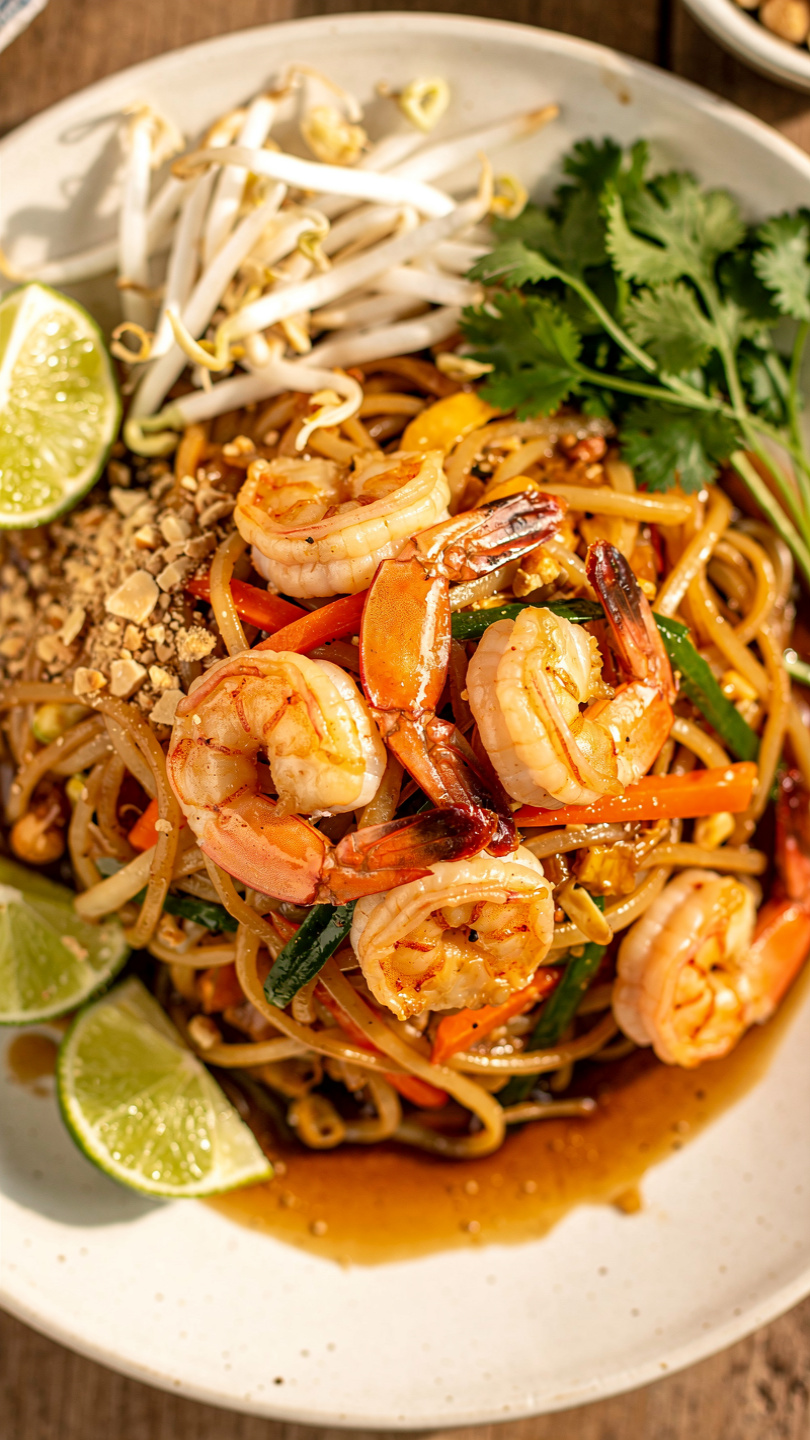
Shrimp Pad Thai (Better Than Takeout!)
This Shrimp Pad Thai is a quick, flavor-packed noodle recipe that rivals your favorite restaurant with a savory-sweet tamarind sauce, tender shrimp, and perfectly chewy rice noodles ready in 30 minutes.

The Shrimp Pad Thai You Will Make on Repeat
There is a reason Pad Thai is one of the most beloved noodle recipes easy enough for a weeknight but impressive enough to serve guests. It is that rare dish that manages to be deeply savory, a little sweet, tangy, and satisfying all at once. With tender shrimp, chewy rice noodles, and a glossy tamarind-forward sauce that clings to every strand, this version is genuinely better than most takeout you will find.
If you have been a little intimidated by Asian cooking or assumed you needed a culinary school degree to pull off a great stir-fry, this recipe is here to change your mind. This is approachable, weeknight-friendly cooking that just happens to taste like something special.
Why This Recipe Actually Works
Most homemade Pad Thai falls flat for one of two reasons: a watery, flavorless sauce or noodles that turn into a gummy clump. This recipe fixes both.
The sauce is built on tamarind paste, which is the backbone of authentic Thai cooking. It gives Pad Thai that distinctive sour-fruity depth you cannot fake with anything else. Balanced with fish sauce for umami, a touch of oyster sauce for richness, and just enough sugar to round out the edges, it is a genuinely restaurant-quality base you can mix in under two minutes.
The other key? Soaking the noodles in warm water rather than boiling them. This keeps them slightly firm going into the wok so they finish cooking in the sauce itself, absorbing all that flavor rather than turning to mush.
Chef's Tip: Get everything prepped and lined up beside your stove before you turn on the heat. Pad Thai moves fast and does not wait around. This style of cooking, called mise en place, is the single biggest difference between a stressful stir-fry and a smooth one.
The Right Tools Make a Real Difference
For genuinely great Asian cooking at home, a proper wok and a high-quality fish sauce are worth every penny. A carbon steel wok heats faster, distributes heat more evenly, and gives you that coveted smoky wok flavor that a regular skillet simply cannot replicate.
Choosing Your Shrimp
For this recipe, large or extra-large shrimp (21/25 count) work best. They stay juicy and substantial in the finished dish rather than shrinking into tiny curls. Fresh shrimp is wonderful if you have access, but frozen shrimp that has been properly thawed overnight in the refrigerator is completely excellent and what most professional kitchens actually use.
A few things to know:
- Peel and devein before cooking for the best texture and easiest eating.
- Pat the shrimp dry with paper towels before they hit the wok. Moisture is the enemy of a good sear.
- Do not overcook. Shrimp are done the moment they turn pink and opaque. They will get a second hit of heat when you add them back to the noodles, so pulling them out early is intentional.
Building the Pad Thai Sauce
This is where people sometimes overthink things. The sauce has four components and comes together in one small bowl:
- Tamarind paste for sour, fruity depth
- Fish sauce for salty umami backbone
- Oyster sauce for a touch of sweetness and body
- Sugar to balance everything out
Whisk it together, taste it, and adjust. It should taste quite strong on its own because it will mellow significantly once it coats the noodles. If you are building toward healthy food dishes, you can reduce the sugar slightly and cut the sodium by using a low-sodium fish sauce.
A Note on Tamarind: Look for tamarind paste or concentrate at any Asian grocery store or online. It is inexpensive, lasts for months in the refrigerator, and is the ingredient that elevates this from a decent noodle stir-fry to something that genuinely tastes like Thai food.
Wok Technique: The Secret to That Restaurant Flavor
Authentic Chinese cooking and Thai stir-fry cooking share one non-negotiable principle: extremely high heat. This is what creates that slightly smoky, caramelized quality in great takeout, sometimes called wok hei or breath of the wok.
At home, you can get close by:
- Using your largest burner on the highest setting
- Preheating the wok until it just begins to smoke before adding oil
- Cooking in stages rather than dumping everything in at once
- Not overcrowding the pan
These healthy dinner recipes from Asian cooking traditions are built around this technique, and once you get the rhythm down, you will find yourself returning to it for everything from fried rice to noodle soups.
Ready to cook? Here is the complete recipe with every detail you need:
Shrimp Pad Thai (Better Than Takeout!)
This Shrimp Pad Thai is a quick, flavor-packed noodle recipe that rivals your favorite restaurant with a savory-sweet tamarind sauce, tender shrimp, and perfectly chewy rice noodles ready in 30 minutes.
Ingredients
- 8 oz flat rice noodles, medium width, soaked in warm water 20 minutes until pliable, then drained
- 1 lb large shrimp, peeled, deveined, tails on or off
- 3 tbsp tamarind paste, or tamarind concentrate
- 3 tbsp fish sauce
- 1 tbsp oyster sauce
- 2 tbsp palm sugar or light brown sugar
- 3 tbsp vegetable oil, divided
- 4 garlic cloves, minced
- 2 shallots, thinly sliced
- 4 oz extra-firm tofu, pressed and cut into small cubes, optional but traditional
- 2 large eggs, lightly beaten
- 1 1/2 cups bean sprouts, divided, half for cooking and half for garnish
- 4 green onions, cut into 1-inch pieces
- 1/2 cup unsalted roasted peanuts, roughly chopped, for garnish
- 2 fresh lime, cut into wedges, for serving
- 1/2 tsp dried red chili flakes, for garnish, adjust to taste
- 1/4 cup fresh cilantro, loosely packed, for garnish
Instruction
Soak the rice noodles in a large bowl of warm (not boiling) water for 20 minutes until pliable but still slightly firm. They will finish cooking in the wok. Drain and set aside.
Make the Pad Thai sauce: whisk together the tamarind paste, fish sauce, oyster sauce, and sugar in a small bowl until the sugar dissolves. Taste and adjust: it should be tangy, savory, and lightly sweet. Set aside.
Heat a large wok or wide skillet over the highest heat your stove allows until it begins to smoke lightly. Add 1 tablespoon of oil. Add the shrimp in a single layer and sear without touching for 1 minute, then flip and cook another 30 seconds until just pink. They should be slightly underdone. Remove to a plate.
Add another tablespoon of oil to the hot wok. Add the shallots and garlic and stir-fry for 60 seconds until fragrant and golden at the edges. If using tofu, add it now and let it crisp for 2 minutes, stirring occasionally.
Add the remaining tablespoon of oil and the drained noodles. Pour the sauce over the noodles and toss everything together using tongs or chopsticks, letting the noodles absorb the sauce for about 1 to 2 minutes.
Push the noodles to one side of the wok. Pour the beaten eggs into the empty space and scramble them gently until just set, about 30 to 45 seconds. Fold the soft egg curds into the noodles.
Return the shrimp to the wok. Add half the bean sprouts and the green onions. Toss everything together over high heat for another 60 seconds until heated through and well combined.
Remove from heat immediately. Divide among four bowls and top with the remaining fresh bean sprouts, chopped peanuts, chili flakes, and cilantro. Serve with lime wedges on the side for squeezing over.
Equipment
- Large wok or wide, heavy-bottomed skillet (12 to 14 inch)
- Large mixing bowl (for soaking noodles)
- Small bowl (for sauce)
- Whisk
- Tongs or long chopsticks
- Sharp knife and cutting board
Notes
Serving and Storing Your Pad Thai
Pad Thai is best served the moment it comes off the heat. Set out the garnishes family-style and let everyone customize their bowl:
- Fresh lime wedges (non-negotiable, please squeeze generously)
- Chopped roasted peanuts for crunch
- Fresh bean sprouts for brightness and texture
- Dried chili flakes for anyone who wants heat
- Fresh cilantro if your crowd is pro-cilantro
Leftovers reheat well in a hot skillet with a splash of water. They keep for up to 3 days in the refrigerator, making this a solid option for healthy food dishes you can prep ahead for the week.
Make It a Full Spread
Pairing ideas if you are cooking for a crowd:
- Thai cucumber salad as a cool, crisp starter
- Tom Kha soup for a warming, coconut-based first course
- Mango sticky rice for dessert to stay firmly in Thai flavor territory
However you serve it, this Shrimp Pad Thai is the kind of recipe that earns a permanent spot in your weeknight rotation. Once you realize how approachable great noodle recipes easy enough for Tuesday night can be, takeout starts looking a lot less necessary.